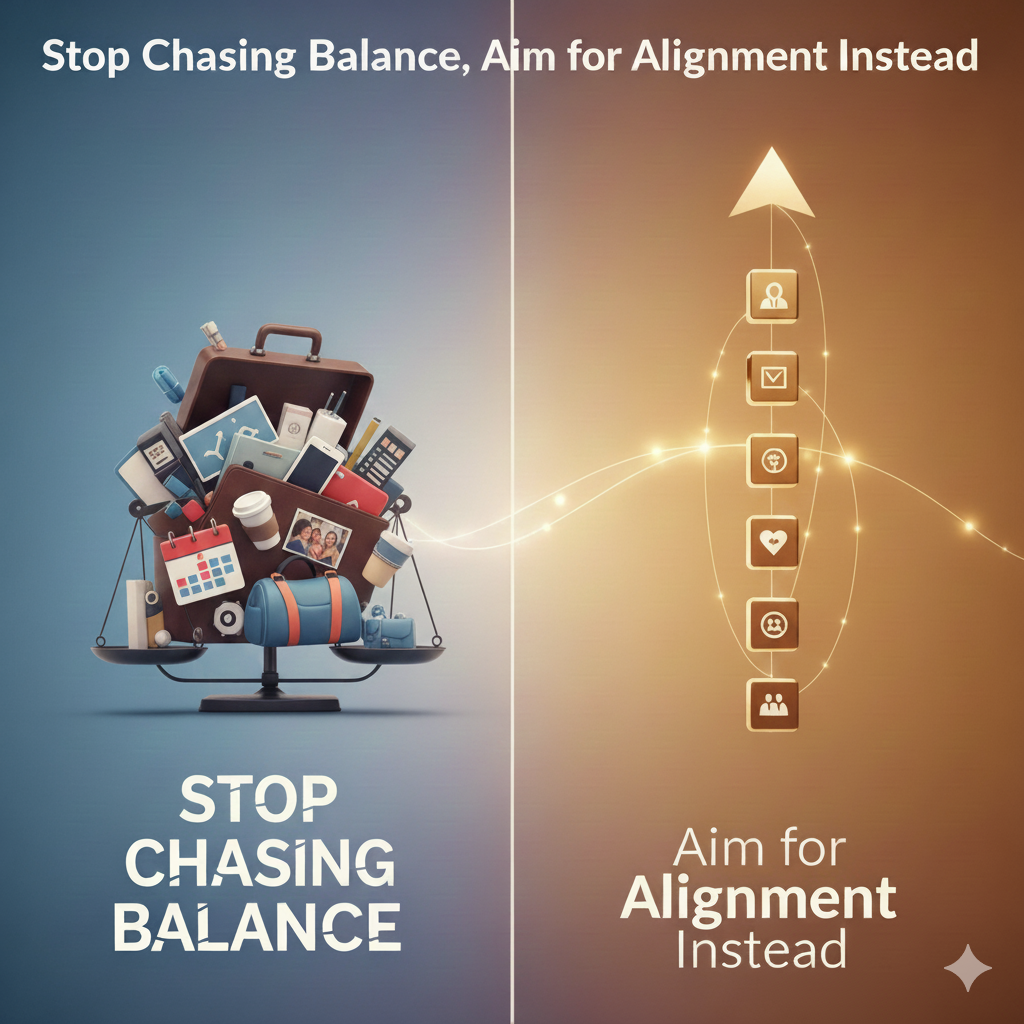
For years, “work-life balance” has been the holy grail of personal growth. The idea is simple: divide your time evenly between work, family, health, and personal pursuits, and everything will be harmonious.
But if you’re a high-achieving professional, you’ve probably realized that balance often feels impossible.
No matter how much you plan, something always seems off deadlines pile up, energy runs low, and life feels fragmented.
The problem isn’t that you’re bad at balancing your life. The problem is that balance itself is the wrong goal.
Instead of chasing balance, it’s time to aim for alignment.
What Alignment Really Means
Alignment is about creating harmony between your actions, values, and goals. It’s not about giving equal time to every area of your life, it’s about making sure that what you spend your time on supports what truly matters to you.
When you’re aligned:
- Your work energizes you instead of draining you.
- Your relationships thrive because they reflect your values.
- Your personal growth feels purposeful, not like a checklist.
Why Chasing Balance Fails
Trying to balance every part of life equally often leads to:
- Guilt and frustration: When one area takes more attention, we feel like we’re failing elsewhere.
- Stress and burnout: Juggling priorities without clarity leaves us scattered and exhausted.
- Lack of progress: Splitting attention evenly can prevent deep growth in areas that matter most.
Balance treats all areas of life as equally urgent. Alignment, by contrast, is intentional and value-driven.
How to Shift from Balance to Alignment
1. Clarify Your Core Values
Identify what truly matters to you career growth, health, relationships, spirituality, creativity, or impact. Use these values as a compass to guide how you spend your time and energy.
2. Set Intentional Goals
Instead of trying to “do it all,” focus on goals that align with your values. For example:
- If growth is a priority, allocate energy toward skill-building or projects that stretch you.
- If family matters most, create rituals that ensure quality time, even during busy periods.
3. Audit Your Current Life
Look at your daily routines, commitments, and habits. Which activities support your values? Which drain energy without meaningful return? Alignment means saying “yes” to what matters and “no” to what doesn’t.
4. Build Flexible Structures
Alignment isn’t rigid. Life shifts, priorities evolve, and circumstances change. Create systems that allow you to adapt while staying anchored to your core values.
5. Reflect Regularly
Schedule weekly or monthly check-ins with yourself. Ask:
- Am I spending my energy where it matters most?
- Are my actions reflecting my values?
- What adjustments will increase alignment this week or month?
Benefits of Living in Alignment
When your life is aligned:
- You feel energized instead of depleted.
- Decision-making becomes easier, choices naturally reflect your values.
- Success feels fulfilling because it’s measured by what matters, not by external expectations.
Conclusion
Stop chasing the elusive ideal of balance. Instead, focus on alignment, living and working in a way that reflects your values, goals, and purpose. Alignment doesn’t mean perfect harmony every day; it means consistently steering your life toward what truly matters.
By aiming for alignment, you’ll find that work, relationships, and personal growth don’t compete, they complement each other, creating a life that feels both productive and deeply fulfilling.
Found the article helpful? If you would like to take it deeper, book a FREE strategy call and get personalized guidance on how you can aim for alignment.